Showing posts with label History. Show all posts

Thursday, April 9, 2015

Turning deep dish pizza upside down

We've discussed once before the unique nature of the Chicago hot dog, but I would have to say that deep dish pizza is the fast food for which Chicago is the most famous.  And rightly so - it's cheesy, it's gooey and it's SO filling.

Our time in Chicago was pretty short this time, and we were so busy during the days that I made the potentially controversial decision not to feed my parents deep-dish pizza while we were in town.  Instead, I took them to a place where pizza is theatre, a place where the concept of ooey-gooey pizza is literally turned upside-down.

The Chicago Pizza and Oven Grinder Company is located in a converted townhouse in the leafy suburb of Lincoln Park, and the cash-only business is worth every good review it gets.  They don't take reservations though so if you're hungry, I'd recommend you show up either just as they open, or right before they close.

Not heeding my own advice, we arrived around 6.30pm on a Saturday night, amidst the hustle-bustle of the dinner rush.  I fought my way past the throngs of people to register ourselves with the maitre d'.  He didn't write anything down - not my name, not my phone number, nothing.  How he possibly remembered who was who is still beyond me.  We purchased a couple of drinks from the bar and waited in the warm, cosy vestibule for the maitre d' to come and find us.

An hour or so later, we were finally seated and confronted with the food menu.  I don't know why they bothered giving us a menu at all; I mean, we knew exactly what we were there to enjoy.

The half-pound pizza pot pie is the most inventive and delicious pizza I have had in a really long time.  It's an individual serving, and includes "triple-raised Sicilian bread-type dough; a homemade sauce consisting of olive oil, fresh garlic, onions, green peppers, whole plum tomatoes and a special blend of cheeses; sausage made from prime Boston butts; and doorknob-size, whole, fresh mushrooms".  I mean, come on.  How could you go wrong?!

But the thing that makes this pizza so special - and so theatrical - is that it is baked in a bowl, with the crust-side up.  So when your pizza pot pie is ready, the waiter brings it over and inverts it at your table.  The ooey-gooey cheese settles into place on the surface of your bowl-shaped pizza, and it is an utter delight to behold, and to gobble up.


With apologies to the deep dish purists but when it comes to pizza, THIS is the taste of Chicago for me.  I definitely recommend you visit The Chicago Pizza and Oven Grinder Company.  Sure, the name is a mouthful, but so are the amazing pizzas!

Tuesday, April 7, 2015

Where buddies and legends hang out

A steak lunch and two glasses of red wine should have put me straight to sleep but being back in Chicago had infused me with some strange kind of energy.  I wanted to soak it all up, and miss nothing.  Plus the fact it was Friday meant I was buzzed about heading to one of my favourite Chicago haunts, Buddy Guy's Legends Bar.

When I lived in Chicago from 2005 to 2009, I discovered a deep and unwavering love of the blues.  There was no pretension about it.  The musicians were young, old, black, white, but all very cool and in turn, I felt cool just listening to the blues - feeling it.

As a result, I never missed a chance to pony up to Buddy Guy's on the south side of Chicago on a Friday night, usually after a few sherbets at a nearby Irish pub, to appreciate live blues and beers with my buddies.  Now Chicago may be home to the fantastic Blues Brothers but for my money, fans of real blues music need look no further than Buddy Guy's to get their regular fix.

Blues legend and electric guitarist Buddy Guy opened his bar in June 1989 and for a long time it was an average, no-frills establishment that cared not for fancy decor or food items.  The real star of Buddy's' bar was the music - the bar became legendary because of the music legends that Buddy invited to grace his stage and delight his audiences.

My recollection of early visits to Buddy Guy's include plastic chairs, toilet doors that didn't lock, and dim lighting.  I also remember taking a blind date there once after our dinner, as I just wanted to be on familiar territory, and somewhere loud enough that I wouldn't have to talk to him.  Ah, memories!  I was even fortunate to hear Buddy play on a number of occasions; taking breaks between songs to drink shots that a steady procession of attractive women had bought for him.  Nothing was slowing that old guy down - and his wicked grin betrayed his every cheeky thought (about the music and the girls).

So I was really pleased that Mum & Dad were keen to come to Buddy Guy's for a Friday night musical treat.  And I'll admit to being rather taken aback by the amazing renovations that had taken place since my last visit.  This wasn't just a coat of paint either; this was a total overhaul of the establishment - right down to the employment of one of friendliest toilet attendants you'll ever meet in your life (a significant plus for women, trust me).  If you didn't know any better, you'd say that Buddy Guy's version 2.0 was much like the Hard Rock Cafe - a blues museum of sorts.  Guitars displayed everywhere, plaques, awards, and historical photos galore.  And what's not to love about that?!

That particular Friday night of our visit, we had tickets to the 9pm show of the fantastically-named Biscuit Miller and the Mix.  Have you ever seen a band and realised that they are way cooler than you will ever be in your entire life?  Well, enter Biscuit Miller.  With his musical roots firmly planted in gospel and soul, this Chicago native raised the roof off Buddy Guy's and had us all clapping and dancing in our seats.  Mum and Dad were really loving it, and we totally got into the spirit of the music, appreciating the decades of obvious talent on stage before us.

Before we knew it, it was midnight but the crowd and the musicians showed no signs of slowing down.  The pace of the day had hit us though, and it was time to call it quits.  Even though Buddy Guy himself was a no-show, our $20 cover charge was so well spent and we would come back in a heartbeat.

Tuesday, March 24, 2015

Bend your arm at this New York institution


Established in 1854, McSorley's Old Ale House is widely recognised as the oldest Irish bar in New York City.  Located in the East Village, it's the kind of place with swinging doors, sawdust on the floor, and it has not been redecorated since forever.

McSorley's operated as an all-male establishment for the first 115 years of its life.  Then in 1970 Faith Seidenberg and her brave female friend attempted to come in for a drink but were ejected from McSorley's onto the frosty January sidewalk, much to the raucous delight of the male patrons and waiters at the time.  Faith Seidenberg decided enough was enough.  A lawyer by trade, she sued McSorley's to compel them to admit female patrons.  She won the landmark case, but she never went back to the bar again.  Ms Seidenberg died at her New York home in January this year, but her efforts will always be remembered.

McSorley's, like Ms Seidenberg, is an unforgettable New York character.  The staff there are always ready with a smile and a tall story.  To wet your whistle, your only choices are light beer or dark beer.  Either choice is a great one of course, and you're rewarded with two little beer steins of frothy, cold goodness.  You can also buy a couple of food items, which is particularly useful as the beers go down very easily.

You'd think that McSorley's would be a tourist trap but it's really not.  I've only ever seen a handful of tourists in there over the past few years; usually it's just locals and the crazy St Patrick's Day crowds (who admittedly come from all over).  When I completed the New York half-marathon in 2012 I hobbled to McSorley's for a cleansing ale (or four, if my memory serves).  And there is something wonderful about coming here on a wet, wintry day, hiding from the cold in the warm, dimly-lit pub.

But even if you go to McSorley's on your own, you'll never be bored.  You need only browse all around the walls, behind the bar, and even on the ceiling for some historical treats and treasures.  There is a bust of JFK, framed photographs of the neighbourhood through the ages, and lots of black and white images of old time New York.  Of a more macabre nature though are the wishbones suspended over a light fixture.  Legend has it that American soldiers in WW1 left the wishbones there after a satisfying chicken lunch, pledging to take them down when they came back from the war.  They have remained there, untouched, ever since.

McSorley's is a beautiful time capsule of New York, and as long as you obey the sign over the bar, "Be good or be gone", your memories will always be good ones.  Cheers!

Saturday, March 21, 2015

Book nerds, unite!

One of the girls in my office recommended I subscribe to the New York Times website.  Not for the articles, she said, but for the events calendar published online every day.  When I finally took her advice, it was like New York City opened up for me.  Work has been insanely busy so it has been a while since I browsed the website, but I am so glad I looked at it this morning.

Not only did I learn about The Grolier Club on NYC's Upper East Side, but I toured A Legacy More Lasting Than Bronze, a fascinating exhibition of Italian Renaissance book publisher, Aldus Manutius.  If you've ever opened a book, much less read one, you owe a debt of gratitude to Aldus and his family.  Check out my photo album below to find out why.


Thursday, February 26, 2015

The Griswolds Take Manhattan...again!

Mum and Dad came to town and the snow finally fell.  Mum was especially pleased.  Buttoning up our winter coats, we braved the elements and took off exploring, capturing some of the city icons at their best.  How we didn't get blown off The High Line in the Arctic breeze is anyone's guess!


My parents are in New York for a couple of weeks, and I took a few days off to show them around. These are just some early photos of our adventures.
Posted by The ABCs of NYC on Saturday, February 21, 2015

Sunday, February 8, 2015

Old-school plays in mint condition

Image source here
Founded in 1992, New York's Mint Theater Company is dedicated to bringing old, often neglected plays back to the stage.  The tiny theater space is located on the 3rd floor of a rather unremarkable building on West 43rd Street. But inside, there isn't a bad seat in the house.

Since the company was established, Mint has staged about 30 plays and yesterday I went along to see its latest production, Fashions for Men - a charming, character-driven comedy by Hungarian playwright Ferenc Molnar.

Old-school haberdashers used to be a place for men to buy their fashion and accessories: gloves; coats; scarves and the like.  But life, on and off stage, gets decidedly more interesting when you introduce women into the action too.  So Act 1 of "Fashion For Men" opens in a haberdashers in Budapest in 1917 that caters to a colourful cast of male and female characters from all walks of life.

In a post-play discussion with the company's dramaturg and scholar, Dr Maya Cantu, we were reminded that even though the play is set in WW1 Europe, Molnar makes no mention of these outside influences in his play.  There's no hint of strife or sacrifice and as one critic put it, the play really does feel like it's taking place "inside a snowglobe".  Indeed, no external or "real life" influences interfere with the action at all.

And maybe that's what helps "Fashion For Men" retain its appeal across the decades.  It's not frozen in time - it could probably be set anywhere, at any point in history.  The characters are certainly credible.  The protagonist is Peter Juhasz, owner of the haberdashers, and the quintessential nice guy.  Never seeing the bad in people, he's constantly being taken for granted by the other characters - they take his money, his emotional energy, and his time.   Around him, we meet the unfaithful wife, the deceptive co-worker, the wise older man, the skirt-chasing aristocrat, and the conniving ingenue - all of whom capitalise on Peter's good nature to achieve their own end game.  Such saintly goodness has led critics to describe Juhasz as "unworldly" and even "pathetic", but I think I share NY Times critic John Corbin's assessment of Juhasz as "a character conceived with the most exquisite grace and sympathy".

As the three-act play unfolded on a series of beautiful old-timey sets, I do remember thinking that Molnar's 1917 Hungary is a lot like 2015 New York City.  There are pushy-shovey people galore out there who will try and take advantage of you if they think you'll let them.  And while his kindness can sometimes be frustrating in the face of such blatant exploitation, ultimately Peter Juhasz sees his fellow characters for who they are, but he stays true to who he is.  He doesn't stoop to the mercenary level of others and because of that, when Peter finally realises his happy ending, you know the audience is proud of him.

Sunday, January 4, 2015

Touring New York's "Cathedral of Commerce"

In 1878, Frank Woolworth invented the concept of the "five and dime" discount store - a place where everything cost either 5 or 10 cents, and all the merchandise was on display.  Shoppers could see and touch what they wanted to buy; they didn't need shop assistants to fetch things for them.  We take this practice for granted these days but back then, Woolworth's retail model was revolutionary.  And his customers loved it so much that by 1911, when Mr Woolworth formally founded his company, he was worth many millions of dollars.

Business was going so well that Woolworth hired a famous architect named Cass Gilbert to design his company's corporate headquarters on Broadway, further requesting that it should be the tallest building in the world.  Gilbert had designed the beautiful US Customs House in New York a few years before, so Woolworth was confident he would design something extra special.  Gilbert got to work and two years later, in 1913, The Woolworth Building was complete.

 It stood proud at 793 feet tall and was, as requested, the tallest building in the world (at that time).  To secure such a record, Woolworth is purported to have kicked in the cash for the building's tower out of his own pocket (more than $13 million!).  But the investment was worth it because at the opening ceremony, the majestic Woolworth Building was declared by many to be New York's "Cathedral of Commerce".

Now back in the early days of skyscrapers, the giant Woolworth Building would have been a tourist drawcard in itself.  People marveled at the neo-Gothic architecture, the gargoyles, and intricate carvings around the main entrance.  But inside, office workers had down time at the indoor swimming pool, the day spa, the observation deck, and the restaurant and retail stores in the lower level.  And the subway even used to run right underneath, so commuting to and from the tallest building in the world was a breeze.

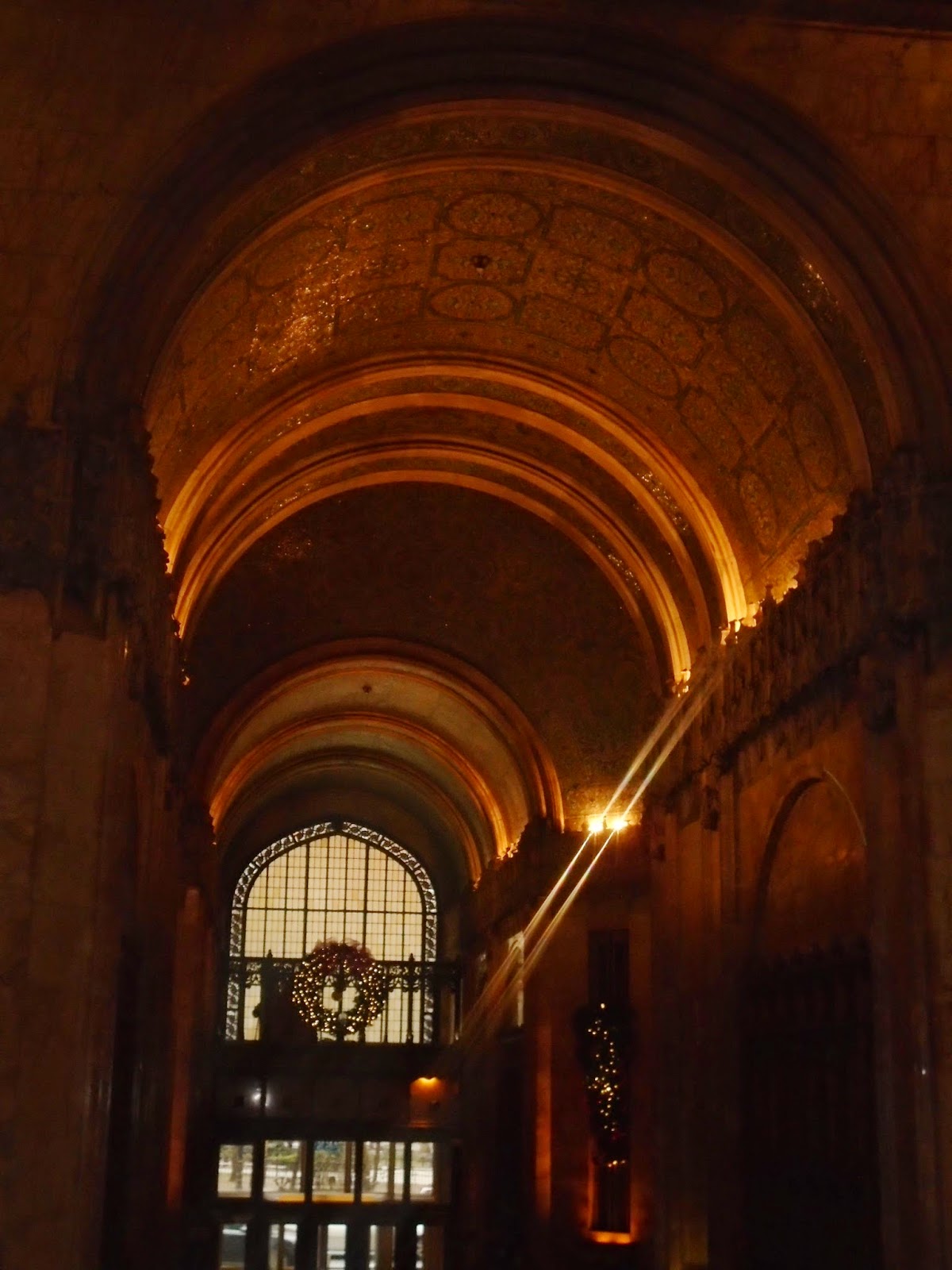
All of these attractions aside, I reckon that even back when the Woolworth Building was first constructed, people must have remembered it for the same reason that we do today: the lobby.  When he designed the lobby, Cass Gilbert totally outdid himself.  It is a beautifully ornate, almost church-like space.  The ceiling has tiny mosaic tiles all over it,  some of which have been coated with gold leaf to give them extra sparkle.  Tiffany won the contract to design the lobby's elevator doors, and they are especially fancy.  There are marble carvings in the cornices - some of them depict leading figures of the time (including Cass Gilbert himself, cradling a plaster model of the building - see below), but other carvings are those of nonsense characters, put there for a bit of fun.


Another fun detail is the inclusion of salamanders in the carvings.  Did you know that according to legend, salamanders are impervious to flames and can actually extinguish fire?  Apparently, lots of buildings all across New York City have salamanders featured in their carvings and metalwork etc to protect the buildings from fire hazards (figuratively, at least).  The Woolworth Building was constructed to stand the test of time - fire safety was foremost in Cass Gilbert's mind and the only wood in the whole place was actually in the banisters in the internal stairwells.  Superstitious though it may be, you can see the salamanders in the gold work of the mailboxes in the Woolworth Building lobby (see him on the bottom left of the photo here?).  Needless to say, I will have to keep my eyes open for more salamanders in other buildings from now on!

You used to be able to wander in off the street and browse the Woolworth Building lobby but not anymore.  These days, access is by guided tour only (you can book them online here), but it's absolutely worth it.  The lobby of the Woolworth Building is just beautiful.  I did a one-hour tour yesterday and our guide (Lisa) was sensational.  She confessed to spending much of her private time at the New-York Historical Society, reviewing the original plans of the building and reading the original correspondence about its construction and development, which they have stored in their archives there.  The trivia Lisa shared with us came from her own exhaustive research, not from anything she parroted from the internet or read off some tired tour script.  It was absolutely wonderful and well worth the $30 ticket price.  I only pasted a couple of photos from the tour because so many of them were blurry, or just didn't do the splendor of the lobby justice.  I would definitely encourage you to add the Woolworth Building to your bucket list of NYC adventures.

Sunday, December 28, 2014

When water and yeast meet barley and hops

Coopers is Australia's largest brewery and is 100% owned by Australians.  Under the leadership of the fifth-generation descendants of Thomas Cooper, the family-owned company produces 12 beers and a range of home brews, and it maintains a 5% share of Australia's beer market.

Mercifully you can buy Coopers here in the US - I've seen it at Whole Foods but also at The Australian pub in New York.  And when I'm back home, I am definitely a loyal customer (though I admittedly can't decide which of their beers I prefer).

If your exposure to Coopers has only ever been from the consumption side, you might be interested to know that you can tour the brewery and see what makes this South Australian icon tick.  Even if you think you don't like beer, give tour guide Frank one hour of your time and he'll take you though the impressive fermentation facilities, bottling and distribution, and quality control centre at Coopers.  You'll work up a thirst, but your tour ends with a tasting of 10 delicious beers - and Frank is a generous pour.

Tours cost about $30 and can be booked online here.  All proceeds go to the Coopers Brewery Foundation, to support a range of philanthropic projects across Australia.

I did a tour of the brewery on my recent visit back home - check out my photo album below:


Friday, December 26, 2014

Come with me and you'll be in a world of pure imagination

I left the Adelaide sunshine behind on 23 December, and New York welcomed me home with bleak grey skies and drizzle.  Equally unpleasant is the fact that I'm now battling jet lag, finding myself wide awake at 4am and staring at the ceiling.

So I've decided that a perfectly acceptable way to pass these sleepless hours is to work my way through the stash of Australian chocolate that I brought back with me, and I'm not talking about supermarket chocolate either.  The calorific wonder food that I'm referring to is an Adelaide family legacy - an icon, 99 years in the making.  That's right, folks - I'm talking about Haigh's Chocolates.

Beehive Corner in Adelaide
Image credit here
In 1915, Alfred Haigh opened a chocolate shop on King William Street, in the commercial centre of Adelaide.  His operations were modest, but customers were faithful and business boomed. Two years later, Mr Haigh purchased his family home in Parkside, just outside of the City, and he set up a small chocolate factory there.  By 1922, there was such a demand for Haigh's Chocolates that Alfred Haigh was forced to move to bigger retail premises at Beehive Corner, and that heritage-listed gem remains the flagship store for Haigh's Chocolates today.

When Alfred Haigh passed away suddenly in 1933, his son took over the store and the notion of the Haigh's family dynasty was born.  You can chart the history of Haigh's by looking at Australia's own history - from the war years, to the early days of Australian cinema, through to the advent of television, and the subsequent expansion of Haigh's interstate.  But even though you can now buy Haigh's products in Sydney and Melbourne, the chocolate is all still made in Adelaide and that's a great source of pride for the city.

Haigh's is still a family business too, with fourth generation descendants of Alfred Haigh steering the company to great success - locally, nationally, and even globally.  In 2014, Haigh's was internationally-certified for its commitment to sustainable cocoa farming and the company has also been a long-time fundraiser for the protection of Australia's native species, including the bilby.  All of this is well and good but let's face it, millions of us eat Haigh's Chocolates simply because they taste amazing - plain and simple.

On my recent trip home I actually got to see how the Haigh's magic was made, by doing a free guided tour at the Visitor Centre in the converted old family home at Parkside.  On the 20-minute tour, our guide Tara-Jane talked us through the breadth of the company's operations, and we got to see the chocolatiers in action.  Tara-Jane spoke so fondly about her colleagues and the family atmosphere at Haigh's, it's little wonder you have to wait until someone retires before a job vacancy gets advertised.  Why would you leave, when you can eat as much chocolate as you want all day!?

For me though, the best thing about the Visitor Centre is that there is also a retail store attached and you can load up your shopping basket with items from the extensive range of Haigh's merchandise, including chocolate frogs, truffles, aprichocs, drinking chocolate, and more.  I'm not even going to list my favourites because we'd be here all day.


Haigh's turns 100 years old next year and I can only imagine the big celebrations they have planned.  I would be delighted if they would agree to export their chocolates, at least to the United States.  That way I could keep a steady supply of peppermint chocolate frogs in my fridge - perfect for addressing 4am jet lag, or when that everyday chocolate craving strikes.

Thursday, December 11, 2014

To market, to market


In the wee hours of the morning on 23 January 1869, a group of market gardeners found their way to the centre of Adelaide and began to sell their fruits and vegetables.  By 6am, about 500 customers had cleaned the vendors out, and Adelaide's "City Market" was born.

Fast forward to today and Adelaide Central Market is more than just a couple of gas lights and rudimentary fencing.  It's now home to 80 permanent stalls and over 100 other shops, visited by more than 8 million people per year.  It brings the best of Adelaide's produce, and the gourmet foods of our wine regions direct to the centre of the City, and its location next door to Adelaide's Chinatown precinct makes it a perfect place to celebrate Adelaide's multiculturalism in the most delicious way possible - through food.

Check out the photo album below:

Wednesday, December 10, 2014

A girl in every Port

About 20 minutes northwest of Adelaide's CBD is the beautiful area of Port Adelaide.  As its name suggests, "The Port" is the headquarters of South Australia's maritime history, and historical architecture and heritage-listed monuments abound.

Our first stop was the Port Adelaide Lighthouse, which was first lit in 1869 and went on to serve South Australian mariners for the next 143 years.  The lighthouse stands 69 feet tall, or 21.03 metres. In 1985 the South Australian Maritime Museum acquired the lighthouse and restored it as a permanent exhibition.  Queen Elizabeth II opened the lighthouse to the public in 1986, as part of the celebrations for South Australia's Jubilee year (150th birthday).   We climbed the 70+ stairs today, and had a wonderful view from the exhibition deck.  A bit blustery, to be sure, but well worth the huff-and-puff climb.

Around the corner, we passed the historic tall ships, the Falie and The One And All.  Their glory days may be behind them, but the boats are still available for private events, charters, and sailing training.  There is also the incredible City of Adelaide - The Splendid Clipper Ship that is moored at Dock One.  Constructed in 1864, the City of Adelaide was recovered from Scotland and is destined for a 10-year restoration, currently being funded by private individuals and corporate donors.  The City of Adelaide is intended to the centerpiece of a seaport village, where visitors can learn about Australia's colonial history.

Continuing the nautical theme, we spent a happy few hours in the South Australian Maritime Museum, whose collection dates back to 1872.  Spread out over 3 floors, the Museum has fantastic exhibits - many of them interactive - and all of which immerse you in the maritime journeys that brought people to South Australia.  I particularly loved the current exhibition called "Rough Medicine" that looked at life & death in the age of sailing.  Some of the horror stories of disease and death aboard those long sea journeys were incredible.

After a bite of lunch, we realised we only had time left to see one more Museum, so we drove over to the National Railway Museum.  It was a first for all of us, which is pretty rare.  I'm so glad we went there because the Museum holds a fantastic collection of train carriages, engines, and artifacts from railway operations not just in South Australia, but across the country.  You get to see model trains that run across a fantastically-detailed miniature landscape.  You can also ride one of the gauge railways at the Museum, but it was just doing its last circuit as we arrived so we missed out on that one.  Next time, for sure.

We only just scratched the surface of Port Adelaide's offerings today.  There is so much to see down here.  I'm coming back to this hood next week, so I'll have another opportunity to see a few more sites then.  In the meantime, check out my Port Adelaide photo album below.


Tuesday, December 9, 2014

Danke schoen, darling!

Hahndorf - 20 mins SE of Adelaide
Image credit here
One of the great things about Adelaide is that you're pretty much 20 minutes from anywhere - from a major shopping centre, from a beach, from a winery, or from gently rolling hills and fresh country air.

Case in point: drive for 20 minutes south-east of the CBD into the Adelaide Hills and you'll come to the lovely town of Hahndorf.  Even when the city bakes in the summer sun, Hahndorf remains a lush and green place.  It is also classified as Australia's oldest German settlement.

But Hahndorf was an area steeped in history well before the Europeans arrived.  For over 2,000 years the Peramangk people occupied the land where Hahndorf is today and they were sustained by its plentiful supply of native flora and fauna.  By the early 1830s the Europeans had settled in Adelaide and in 1838, a South Australian businessman named George Fife Angas went to London to promote colonisation here.  On his travels he met a man named Pastor Kavel who was trying to help German Lutherans who were being persecuted by the King of Prussia.  Angas persuaded Kavel that South Australia was an ideal place to escape to, and the first cohort of German settlers arrived here the following year.  Thirty-eight families established their homes in Hahndorf, and while it was originally a farming village, Hahndorf ultimately became a major service centre for the surrounding region, and businesses prospered.  These days, Hahndorf remains one of the most popular tourist destinations in the city.

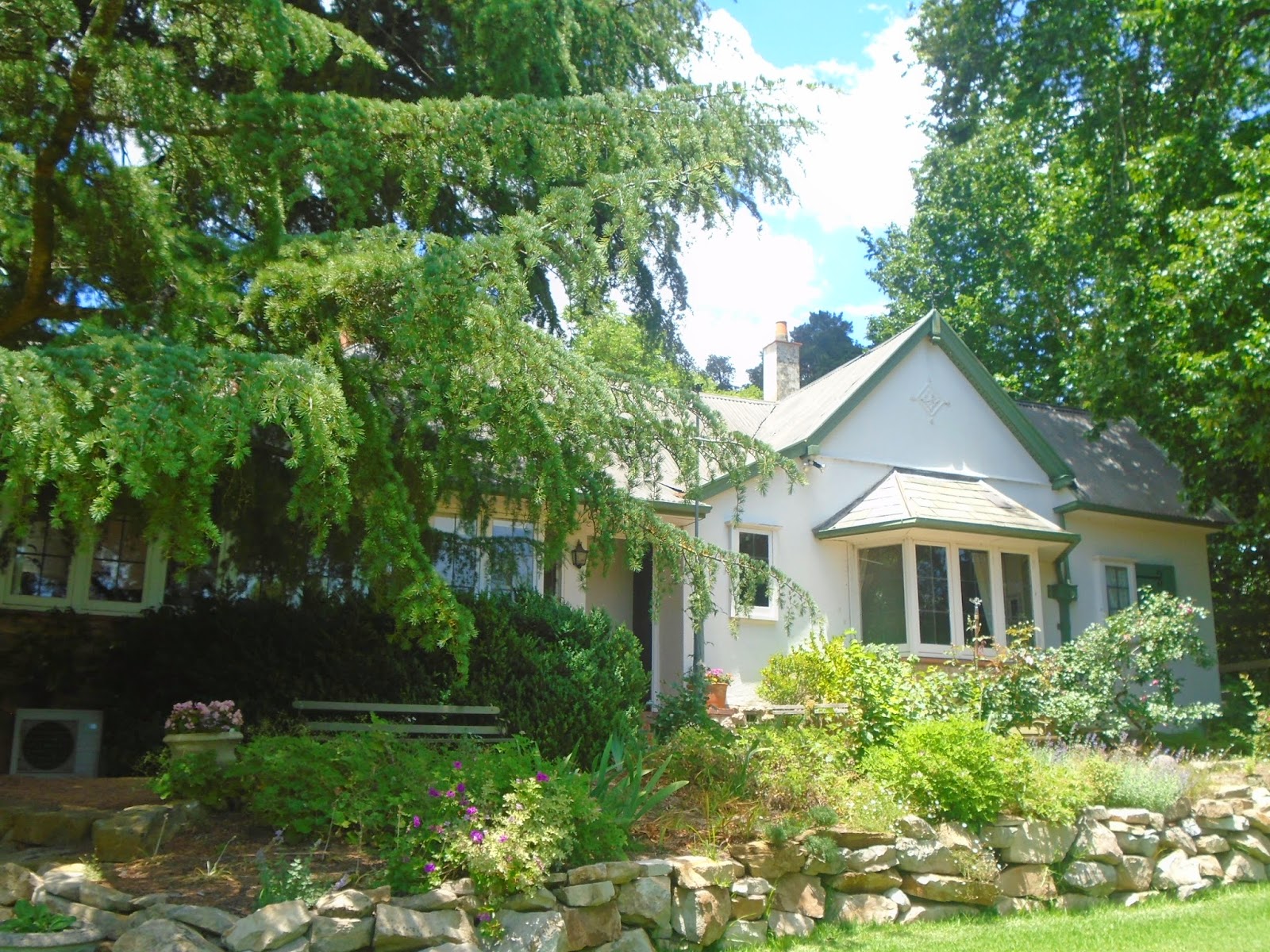
We started our day with a visit to The Cedars, one of Australia's historic and artistic treasures.  It was the home of Hans Heysen, master of the Australian landscape and also showcases the work of his talented daughter, Nora Heysen.  An accomplished artist in her own right, in 1938 Nora was the first woman to win the Archibald Prize.  At the Cedars, you can tour the Heysen family home, and even look through the famous artist's studio, which is now the oldest purpose-built artist's studio in the country.

With our bellies growling, it was time for lunch and we drove along the Main Street, under the 100-year old elm trees that line the sides of the road, shading the heritage-listed homes and stores.  There were signs up everywhere celebrating the 175th anniversary of German settlement in the area so we felt it was rather fitting to snag a table inside The German Arms, which was established here in 1839.  Their chicken schnitzels, German beers, and crisp ciders are all pretty amazing - you heard it here first.

We walked off lunch by dawdling along the beautiful Main Street, weaving in and out of the old stores.  The architecture here is so charming and many of the stores even sell old-time goods like boiled sweets, home-made candles, and freshly-made ice-cream, prepared with recipes that haven't changed for generations.  Local artists are thriving here and their works are on display in tiny galleries lining the Main Street.  I found the indigenous artwork at The Aboriginal Art House to be particularly impressive, but you know that I am a huge sucker for colour.

At this point in the warm afternoon, hydration was essential so we called into the beautiful, brand new cellar door location for Handcrafted by Geoff Hardy.  Geoff's son Seb took great care of us and made sure I sampled the delicious Fiano 2014, which of course I had to purchase at the end of the wine tasting.  Make sure you call in to see the Hardys when you're in Hahndorf - they will not steer you wrong.

On the way home, we called in to see another South Australian family dynasty- the Beerenberg Family Farm.  We chose not to pick our own strawberries (though you can, from November to April); rather, we left such sporty activities to the young families.  Instead, we just browsed the storefront area and came home with armloads of fresh jams, chutneys, and sauces.  Definitely worth a look to score some tasty treats at the end of a long day.

I got a bit snap-happy today too, and I've done my best to write captions against most of the photos in this album.  Check out the Hahndorf photos in the album below.


Monday, December 8, 2014

A pukka lunch is money in the bank

When I lived in London, I worked at Australia's High Commission and our offices were in the beautiful Australia House building on The Strand.  It's down the road from St Paul's Cathedral, though I have to confess that old ladies selling birdseed on the front steps for tuppence a bag are long gone now.

The area around the Cathedral is called "The City" and it's a bit like Wall Street in New York - full of bankers and financial institutions.  But there's also a fancy shopping centre there called One New Change.  I spent a bit of time in that shopping centre - not for commercial reasons, but for culinary ones.  Because inside this modern, glass building you'll find Barbecoa, one of the restaurants in Jamie Oliver's ever-growing empire.  The number of cocktails and heaped plates of BBQ I devoured there are lost to history, but I will never forget our work Christmas lunch in 2010 when, quite by chance, Jamie Oliver came into the restaurant and was gracious enough to have a photo with us.  I was never lucky enough to meet Jamie again, either at the restaurant or at his Recipease place in Clapham, the restaurant/school/retail store around the corner from where I was living for a time.  But suffice it to say that my admiration for Jamie, his cooking style, and his approach to food, continues.

In light of all this, it will hardly surprise you that I found myself dining today at Jamie's Italian, his new restaurant in Adelaide's CBD.  There are now 30 "Jamie's Italian" restaurant worldwide, including 4 others across Australia. I wasn't expecting to see Jamie here either of course, but his influence is all over the menu, especially the use of fresh, local produce including Australian lamb.

The restaurant has also breathed life back into a gorgeous piece of Adelaide's architectural history.  The Art Deco-style building was designed in 1938 and housed a number of banks over the years.  It has now been heritage-listed, and Jamie's developers have obviously been very sympathetic to that.  The opulent marble flooring and imposing columns are all still there, but downstairs the bank vaults have been converted into the toilets (authentic, porcelain "Crappers" too - check out the photos below!).

My parents and I had lunch at Jamie's at 2.30pm, which is pretty late in the day, but it was the earliest we could get in.  And that's on a Monday, which says quite a lot about how positively Adelaide diners have responded to Jamie's latest venture.

In spite of the hour, our stomach grumbles were totally worth it.  The menu reflects the breadth of Italian cuisine - meats, fish, vegetables, cheeses, and tasting plates/boards too.  How was I expected to narrow it all down?  So we didn't - we just ate a bit of everything.  In addition to the amazing pasta, you definitely need to try the polenta chips, the risotto balls (arancini) and the tutti frutti lemon meringue pie...so good!  But of course, you also need to do as we did and wash it down with local South Australian ciders and wines - a total treat!

As we were leaving today, a small crowd had already gathered on the footpath outside to come in for the start of the dinner rush.  I got the sense it was going to be another busy evening for the cheerful, charming staff.  The phrase "laughing all the way to the bank" also sprang to mind, but that seems totally appropriate, given the restaurant's previous tenants.  This new restaurant is a great addition to Jamie's food family, and a real coup for the city.


Sunday, December 7, 2014

There's no place like home

Welcome to Adelaide, dear friends!  It's so great to be home.

I've spent the last 20+ hours travelling, and the twinkly Christmas lights that are shining in Bryant Park and Rockefeller Center in New York are literally half a world away now.

After delays getting out of JFK and LAX, and a missed connection out of Sydney, it was wonderful to finally get off the plane in my home town and be met by this fantastic gingerbread village, right inside Adelaide Airport.
 
If Adelaide has done something like this before, I've never been lucky enough to experience it.  I mean, come on!  In addition to the little gingerbread houses, there were two model trains, and a giant mountain of royal icing that stands at least 2 metres high and took 200 kilograms of icing/confectioner's sugar and hundreds of lollies/candies to build. 

The delicious display is the excellent work of the patisserie students at the Regency Campus of TAFE (Technical & Further Education) SA and will be on show until 5 January.  Snowy landscapes aren't exactly a feature of Adelaide at Christmas time - or at any time really - but I'll celebrate edible talent any way I can!


On the subject of Adelaide landscapes, I was a little dismayed to see how yellowed and crunchy the countryside looked as we commenced our descent into Adelaide this afternoon.  The meteorologists have already predicted that Adelaide will have blistering summer heat waves this year.  Days over 40 degrees Celsius (104F) aren't exactly uncommon during summer, but the dry heat can get awfully uncomfortable for people, pets, and gardens.  Such a contrast to my other home town, huh?

Now I know we're  all on vacation here, and we're not meant to be using our brains much,  but before we throw ourselves into Adelaide tourism I think it's worth giving you some quick information so you can get your bearings.

British colonists (not convicts) first settled in South Australia in 1836, but the Kaurna (pronounced 'gah-na') people have been the traditional owners of the land in the Adelaide Plains area for millennia.  The Kaurna people lived a nomadic existence on their land, which also include the area where Adelaide's central business district is now situated.  We'll revisit Adelaide's indigenous history and culture in a couple of days time.

Fast forward to today though, and there are 1.67 million people living in South Australia, which is basically the population of Nebraska living in an area bigger than Texas.  But 77% of South Australians reside in the "Greater Adelaide" area - which includes the capital city of Adelaide, and its surrounding major suburbs.  We've basically clustered around the capital and the coastline - but when I show you photos, you'll understand why.

I grew up in this Greater Adelaide area and when I was at school, I was friends with "Aussie" kids, but also kids whose parents had moved here from Greece, Italy, and countries all across Asia.  Over the years since, Adelaide has become home to a vibrant Filipino community, and families from Afghanistan, South Sudan, and beyond.  Mass migration has been part of Australia's way of life for decades - very similar to New York, in that respect.  And just like New York, Adelaide has become a more diverse and (I'd argue) a more interesting place for it.  You can see this diversity reflected in our food, music,  religious and sporting cultures.

But we will discover this all in good time.  For now though, I'm going to unwind with a glass of local South Australian wine and attempt to sleep off this jetlag.  We've got a busy couple of weeks ahead!