Sunday, January 4, 2015

Touring New York's "Cathedral of Commerce"

In 1878, Frank Woolworth invented the concept of the "five and dime" discount store - a place where everything cost either 5 or 10 cents, and all the merchandise was on display.  Shoppers could see and touch what they wanted to buy; they didn't need shop assistants to fetch things for them.  We take this practice for granted these days but back then, Woolworth's retail model was revolutionary.  And his customers loved it so much that by 1911, when Mr Woolworth formally founded his company, he was worth many millions of dollars.

Business was going so well that Woolworth hired a famous architect named Cass Gilbert to design his company's corporate headquarters on Broadway, further requesting that it should be the tallest building in the world.  Gilbert had designed the beautiful US Customs House in New York a few years before, so Woolworth was confident he would design something extra special.  Gilbert got to work and two years later, in 1913, The Woolworth Building was complete.

 It stood proud at 793 feet tall and was, as requested, the tallest building in the world (at that time).  To secure such a record, Woolworth is purported to have kicked in the cash for the building's tower out of his own pocket (more than $13 million!).  But the investment was worth it because at the opening ceremony, the majestic Woolworth Building was declared by many to be New York's "Cathedral of Commerce".

Now back in the early days of skyscrapers, the giant Woolworth Building would have been a tourist drawcard in itself.  People marveled at the neo-Gothic architecture, the gargoyles, and intricate carvings around the main entrance.  But inside, office workers had down time at the indoor swimming pool, the day spa, the observation deck, and the restaurant and retail stores in the lower level.  And the subway even used to run right underneath, so commuting to and from the tallest building in the world was a breeze.

All of these attractions aside, I reckon that even back when the Woolworth Building was first constructed, people must have remembered it for the same reason that we do today: the lobby.  When he designed the lobby, Cass Gilbert totally outdid himself.  It is a beautifully ornate, almost church-like space.  The ceiling has tiny mosaic tiles all over it,  some of which have been coated with gold leaf to give them extra sparkle.  Tiffany won the contract to design the lobby's elevator doors, and they are especially fancy.  There are marble carvings in the cornices - some of them depict leading figures of the time (including Cass Gilbert himself, cradling a plaster model of the building - see below), but other carvings are those of nonsense characters, put there for a bit of fun.


Another fun detail is the inclusion of salamanders in the carvings.  Did you know that according to legend, salamanders are impervious to flames and can actually extinguish fire?  Apparently, lots of buildings all across New York City have salamanders featured in their carvings and metalwork etc to protect the buildings from fire hazards (figuratively, at least).  The Woolworth Building was constructed to stand the test of time - fire safety was foremost in Cass Gilbert's mind and the only wood in the whole place was actually in the banisters in the internal stairwells.  Superstitious though it may be, you can see the salamanders in the gold work of the mailboxes in the Woolworth Building lobby (see him on the bottom left of the photo here?).  Needless to say, I will have to keep my eyes open for more salamanders in other buildings from now on!
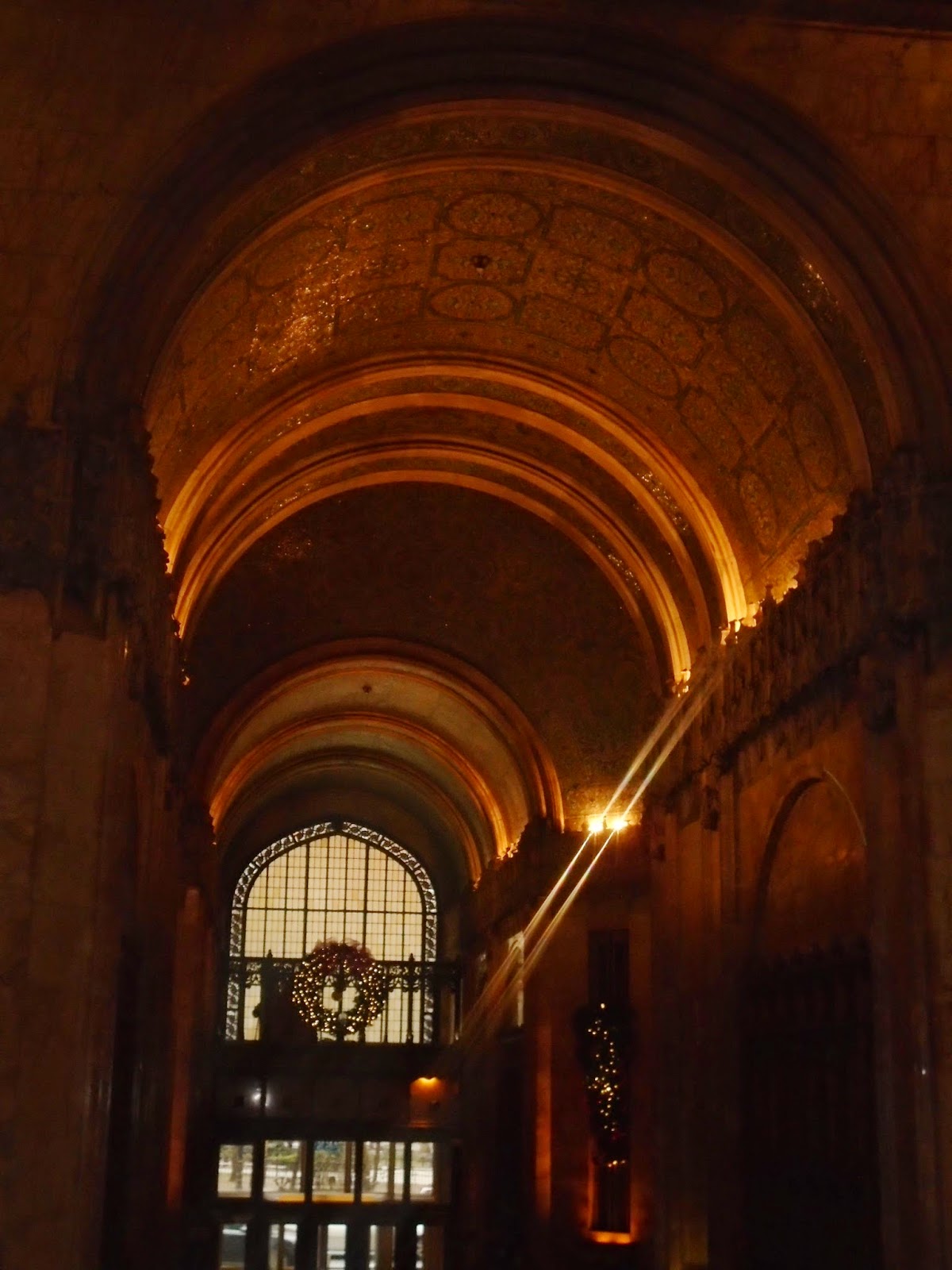
You used to be able to wander in off the street and browse the Woolworth Building lobby but not anymore.  These days, access is by guided tour only (you can book them online here), but it's absolutely worth it.  The lobby of the Woolworth Building is just beautiful.  I did a one-hour tour yesterday and our guide (Lisa) was sensational.  She confessed to spending much of her private time at the New-York Historical Society, reviewing the original plans of the building and reading the original correspondence about its construction and development, which they have stored in their archives there.  The trivia Lisa shared with us came from her own exhaustive research, not from anything she parroted from the internet or read off some tired tour script.  It was absolutely wonderful and well worth the $30 ticket price.  I only pasted a couple of photos from the tour because so many of them were blurry, or just didn't do the splendor of the lobby justice.  I would definitely encourage you to add the Woolworth Building to your bucket list of NYC adventures.

Sunday, December 28, 2014

When water and yeast meet barley and hops

Coopers is Australia's largest brewery and is 100% owned by Australians.  Under the leadership of the fifth-generation descendants of Thomas Cooper, the family-owned company produces 12 beers and a range of home brews, and it maintains a 5% share of Australia's beer market.

Mercifully you can buy Coopers here in the US - I've seen it at Whole Foods but also at The Australian pub in New York.  And when I'm back home, I am definitely a loyal customer (though I admittedly can't decide which of their beers I prefer).

If your exposure to Coopers has only ever been from the consumption side, you might be interested to know that you can tour the brewery and see what makes this South Australian icon tick.  Even if you think you don't like beer, give tour guide Frank one hour of your time and he'll take you though the impressive fermentation facilities, bottling and distribution, and quality control centre at Coopers.  You'll work up a thirst, but your tour ends with a tasting of 10 delicious beers - and Frank is a generous pour.

Tours cost about $30 and can be booked online here.  All proceeds go to the Coopers Brewery Foundation, to support a range of philanthropic projects across Australia.

I did a tour of the brewery on my recent visit back home - check out my photo album below:


Friday, December 26, 2014

Come with me and you'll be in a world of pure imagination

I left the Adelaide sunshine behind on 23 December, and New York welcomed me home with bleak grey skies and drizzle.  Equally unpleasant is the fact that I'm now battling jet lag, finding myself wide awake at 4am and staring at the ceiling.

So I've decided that a perfectly acceptable way to pass these sleepless hours is to work my way through the stash of Australian chocolate that I brought back with me, and I'm not talking about supermarket chocolate either.  The calorific wonder food that I'm referring to is an Adelaide family legacy - an icon, 99 years in the making.  That's right, folks - I'm talking about Haigh's Chocolates.

Beehive Corner in Adelaide
Image credit here
In 1915, Alfred Haigh opened a chocolate shop on King William Street, in the commercial centre of Adelaide.  His operations were modest, but customers were faithful and business boomed. Two years later, Mr Haigh purchased his family home in Parkside, just outside of the City, and he set up a small chocolate factory there.  By 1922, there was such a demand for Haigh's Chocolates that Alfred Haigh was forced to move to bigger retail premises at Beehive Corner, and that heritage-listed gem remains the flagship store for Haigh's Chocolates today.

When Alfred Haigh passed away suddenly in 1933, his son took over the store and the notion of the Haigh's family dynasty was born.  You can chart the history of Haigh's by looking at Australia's own history - from the war years, to the early days of Australian cinema, through to the advent of television, and the subsequent expansion of Haigh's interstate.  But even though you can now buy Haigh's products in Sydney and Melbourne, the chocolate is all still made in Adelaide and that's a great source of pride for the city.

Haigh's is still a family business too, with fourth generation descendants of Alfred Haigh steering the company to great success - locally, nationally, and even globally.  In 2014, Haigh's was internationally-certified for its commitment to sustainable cocoa farming and the company has also been a long-time fundraiser for the protection of Australia's native species, including the bilby.  All of this is well and good but let's face it, millions of us eat Haigh's Chocolates simply because they taste amazing - plain and simple.

On my recent trip home I actually got to see how the Haigh's magic was made, by doing a free guided tour at the Visitor Centre in the converted old family home at Parkside.  On the 20-minute tour, our guide Tara-Jane talked us through the breadth of the company's operations, and we got to see the chocolatiers in action.  Tara-Jane spoke so fondly about her colleagues and the family atmosphere at Haigh's, it's little wonder you have to wait until someone retires before a job vacancy gets advertised.  Why would you leave, when you can eat as much chocolate as you want all day!?

For me though, the best thing about the Visitor Centre is that there is also a retail store attached and you can load up your shopping basket with items from the extensive range of Haigh's merchandise, including chocolate frogs, truffles, aprichocs, drinking chocolate, and more.  I'm not even going to list my favourites because we'd be here all day.


Haigh's turns 100 years old next year and I can only imagine the big celebrations they have planned.  I would be delighted if they would agree to export their chocolates, at least to the United States.  That way I could keep a steady supply of peppermint chocolate frogs in my fridge - perfect for addressing 4am jet lag, or when that everyday chocolate craving strikes.

Thursday, December 11, 2014

To market, to market


In the wee hours of the morning on 23 January 1869, a group of market gardeners found their way to the centre of Adelaide and began to sell their fruits and vegetables.  By 6am, about 500 customers had cleaned the vendors out, and Adelaide's "City Market" was born.

Fast forward to today and Adelaide Central Market is more than just a couple of gas lights and rudimentary fencing.  It's now home to 80 permanent stalls and over 100 other shops, visited by more than 8 million people per year.  It brings the best of Adelaide's produce, and the gourmet foods of our wine regions direct to the centre of the City, and its location next door to Adelaide's Chinatown precinct makes it a perfect place to celebrate Adelaide's multiculturalism in the most delicious way possible - through food.

Check out the photo album below:

Wednesday, December 10, 2014

A girl in every Port

About 20 minutes northwest of Adelaide's CBD is the beautiful area of Port Adelaide.  As its name suggests, "The Port" is the headquarters of South Australia's maritime history, and historical architecture and heritage-listed monuments abound.

Our first stop was the Port Adelaide Lighthouse, which was first lit in 1869 and went on to serve South Australian mariners for the next 143 years.  The lighthouse stands 69 feet tall, or 21.03 metres. In 1985 the South Australian Maritime Museum acquired the lighthouse and restored it as a permanent exhibition.  Queen Elizabeth II opened the lighthouse to the public in 1986, as part of the celebrations for South Australia's Jubilee year (150th birthday).   We climbed the 70+ stairs today, and had a wonderful view from the exhibition deck.  A bit blustery, to be sure, but well worth the huff-and-puff climb.

Around the corner, we passed the historic tall ships, the Falie and The One And All.  Their glory days may be behind them, but the boats are still available for private events, charters, and sailing training.  There is also the incredible City of Adelaide - The Splendid Clipper Ship that is moored at Dock One.  Constructed in 1864, the City of Adelaide was recovered from Scotland and is destined for a 10-year restoration, currently being funded by private individuals and corporate donors.  The City of Adelaide is intended to the centerpiece of a seaport village, where visitors can learn about Australia's colonial history.

Continuing the nautical theme, we spent a happy few hours in the South Australian Maritime Museum, whose collection dates back to 1872.  Spread out over 3 floors, the Museum has fantastic exhibits - many of them interactive - and all of which immerse you in the maritime journeys that brought people to South Australia.  I particularly loved the current exhibition called "Rough Medicine" that looked at life & death in the age of sailing.  Some of the horror stories of disease and death aboard those long sea journeys were incredible.

After a bite of lunch, we realised we only had time left to see one more Museum, so we drove over to the National Railway Museum.  It was a first for all of us, which is pretty rare.  I'm so glad we went there because the Museum holds a fantastic collection of train carriages, engines, and artifacts from railway operations not just in South Australia, but across the country.  You get to see model trains that run across a fantastically-detailed miniature landscape.  You can also ride one of the gauge railways at the Museum, but it was just doing its last circuit as we arrived so we missed out on that one.  Next time, for sure.

We only just scratched the surface of Port Adelaide's offerings today.  There is so much to see down here.  I'm coming back to this hood next week, so I'll have another opportunity to see a few more sites then.  In the meantime, check out my Port Adelaide photo album below.


Tuesday, December 9, 2014

Danke schoen, darling!

Hahndorf - 20 mins SE of Adelaide
Image credit here
One of the great things about Adelaide is that you're pretty much 20 minutes from anywhere - from a major shopping centre, from a beach, from a winery, or from gently rolling hills and fresh country air.

Case in point: drive for 20 minutes south-east of the CBD into the Adelaide Hills and you'll come to the lovely town of Hahndorf.  Even when the city bakes in the summer sun, Hahndorf remains a lush and green place.  It is also classified as Australia's oldest German settlement.

But Hahndorf was an area steeped in history well before the Europeans arrived.  For over 2,000 years the Peramangk people occupied the land where Hahndorf is today and they were sustained by its plentiful supply of native flora and fauna.  By the early 1830s the Europeans had settled in Adelaide and in 1838, a South Australian businessman named George Fife Angas went to London to promote colonisation here.  On his travels he met a man named Pastor Kavel who was trying to help German Lutherans who were being persecuted by the King of Prussia.  Angas persuaded Kavel that South Australia was an ideal place to escape to, and the first cohort of German settlers arrived here the following year.  Thirty-eight families established their homes in Hahndorf, and while it was originally a farming village, Hahndorf ultimately became a major service centre for the surrounding region, and businesses prospered.  These days, Hahndorf remains one of the most popular tourist destinations in the city.

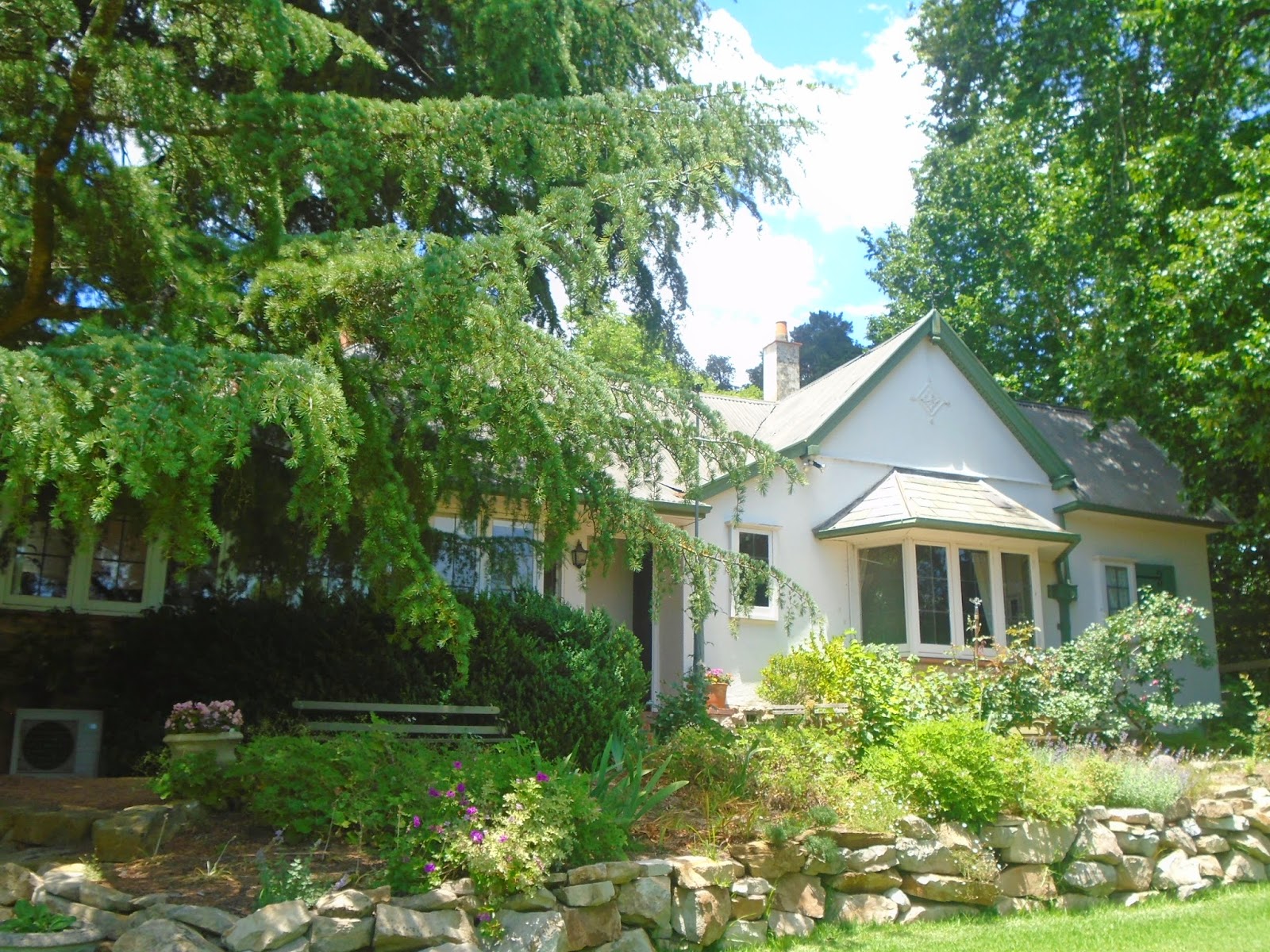
We started our day with a visit to The Cedars, one of Australia's historic and artistic treasures.  It was the home of Hans Heysen, master of the Australian landscape and also showcases the work of his talented daughter, Nora Heysen.  An accomplished artist in her own right, in 1938 Nora was the first woman to win the Archibald Prize.  At the Cedars, you can tour the Heysen family home, and even look through the famous artist's studio, which is now the oldest purpose-built artist's studio in the country.

With our bellies growling, it was time for lunch and we drove along the Main Street, under the 100-year old elm trees that line the sides of the road, shading the heritage-listed homes and stores.  There were signs up everywhere celebrating the 175th anniversary of German settlement in the area so we felt it was rather fitting to snag a table inside The German Arms, which was established here in 1839.  Their chicken schnitzels, German beers, and crisp ciders are all pretty amazing - you heard it here first.

We walked off lunch by dawdling along the beautiful Main Street, weaving in and out of the old stores.  The architecture here is so charming and many of the stores even sell old-time goods like boiled sweets, home-made candles, and freshly-made ice-cream, prepared with recipes that haven't changed for generations.  Local artists are thriving here and their works are on display in tiny galleries lining the Main Street.  I found the indigenous artwork at The Aboriginal Art House to be particularly impressive, but you know that I am a huge sucker for colour.

At this point in the warm afternoon, hydration was essential so we called into the beautiful, brand new cellar door location for Handcrafted by Geoff Hardy.  Geoff's son Seb took great care of us and made sure I sampled the delicious Fiano 2014, which of course I had to purchase at the end of the wine tasting.  Make sure you call in to see the Hardys when you're in Hahndorf - they will not steer you wrong.

On the way home, we called in to see another South Australian family dynasty- the Beerenberg Family Farm.  We chose not to pick our own strawberries (though you can, from November to April); rather, we left such sporty activities to the young families.  Instead, we just browsed the storefront area and came home with armloads of fresh jams, chutneys, and sauces.  Definitely worth a look to score some tasty treats at the end of a long day.

I got a bit snap-happy today too, and I've done my best to write captions against most of the photos in this album.  Check out the Hahndorf photos in the album below.


Monday, December 8, 2014

A pukka lunch is money in the bank

When I lived in London, I worked at Australia's High Commission and our offices were in the beautiful Australia House building on The Strand.  It's down the road from St Paul's Cathedral, though I have to confess that old ladies selling birdseed on the front steps for tuppence a bag are long gone now.

The area around the Cathedral is called "The City" and it's a bit like Wall Street in New York - full of bankers and financial institutions.  But there's also a fancy shopping centre there called One New Change.  I spent a bit of time in that shopping centre - not for commercial reasons, but for culinary ones.  Because inside this modern, glass building you'll find Barbecoa, one of the restaurants in Jamie Oliver's ever-growing empire.  The number of cocktails and heaped plates of BBQ I devoured there are lost to history, but I will never forget our work Christmas lunch in 2010 when, quite by chance, Jamie Oliver came into the restaurant and was gracious enough to have a photo with us.  I was never lucky enough to meet Jamie again, either at the restaurant or at his Recipease place in Clapham, the restaurant/school/retail store around the corner from where I was living for a time.  But suffice it to say that my admiration for Jamie, his cooking style, and his approach to food, continues.

In light of all this, it will hardly surprise you that I found myself dining today at Jamie's Italian, his new restaurant in Adelaide's CBD.  There are now 30 "Jamie's Italian" restaurant worldwide, including 4 others across Australia. I wasn't expecting to see Jamie here either of course, but his influence is all over the menu, especially the use of fresh, local produce including Australian lamb.

The restaurant has also breathed life back into a gorgeous piece of Adelaide's architectural history.  The Art Deco-style building was designed in 1938 and housed a number of banks over the years.  It has now been heritage-listed, and Jamie's developers have obviously been very sympathetic to that.  The opulent marble flooring and imposing columns are all still there, but downstairs the bank vaults have been converted into the toilets (authentic, porcelain "Crappers" too - check out the photos below!).

My parents and I had lunch at Jamie's at 2.30pm, which is pretty late in the day, but it was the earliest we could get in.  And that's on a Monday, which says quite a lot about how positively Adelaide diners have responded to Jamie's latest venture.

In spite of the hour, our stomach grumbles were totally worth it.  The menu reflects the breadth of Italian cuisine - meats, fish, vegetables, cheeses, and tasting plates/boards too.  How was I expected to narrow it all down?  So we didn't - we just ate a bit of everything.  In addition to the amazing pasta, you definitely need to try the polenta chips, the risotto balls (arancini) and the tutti frutti lemon meringue pie...so good!  But of course, you also need to do as we did and wash it down with local South Australian ciders and wines - a total treat!

As we were leaving today, a small crowd had already gathered on the footpath outside to come in for the start of the dinner rush.  I got the sense it was going to be another busy evening for the cheerful, charming staff.  The phrase "laughing all the way to the bank" also sprang to mind, but that seems totally appropriate, given the restaurant's previous tenants.  This new restaurant is a great addition to Jamie's food family, and a real coup for the city.